christy_fight_or_buy_500.jpg)
Fight or Buy Liberty Bonds by Howard Chandler Christy 1917. Collection of Thomas L. and Edward L. Pulling. Courtesy of The Smithsonian American Art Museum.
|
 |
| Over the Top:
The Illustrated Posters of World War I November 8, 2008 through January 25, 2009
During the First World War, richly illustrated posters inspiring public support served as a primary mechanism of mass communication. Persuasive visual artifacts featuring bold graphics, powerful imagery, and concise commands, posters of the era encouraged a sense of nationalism and pride, and roused Americans to support their troops, fund international aid projects, and buy bonds to finance America's participation in the war. Iconic symbols of the United States, including the Statue of Liberty, Uncle Sam, and the American flag, appeared prominently on many World War I posters, richly designed by an impressive roster of celebrated illustrators. Imagery by J.C. Leyendecker, James Montgomery Flagg, Howard Chandler Christie, Jessie Willcox Smith, Henry Raleigh and others provide a fascinating window to the American experience during the early twentieth century.
Over the Top: American Posters from World War I features selected posters from the collection of Thomas and Edward Pulling, grandson and great-grandson of the Honorable R.C. Leffingwell, Assistant Secretary of the Treasury and head of the War Loan Organization. Leffingwell was charged by President Woodrow Wilson and Secretary of the Treasury William G. McAdoo to devise a strategy for underwriting the war effort. He received this collection of posters in gratitude for his role in the success of the war bond campaigns. The exhibition has been organized by the Smithsonian American Art Museum, Washington, D.C., and is supported in part by the C.F. Foundation, Atlanta.
|
| Artists in Their Studios February 7, 2009 through May 25, 2009
Artists in Their Studios offers a unique glimpse at the lives and studio spaces of more than seventy-five important American artists from the late nineteenth century to today. Rarely seen photographs and primary source materials including letters, artists’ handwritten notes, and personal effects from the Smithsonian’s Archives of American Art are featured in this compelling exhibition, which offers an intimate perspective on artists at work, at home and abroad. Photographs of Alexander Calder, William Merritt Chase, Chuck Close, Ellsworth Kelly, Willem de Kooning, Richard Diebenkorn, Arthur Wesley Dow, Marcel Duchamp, Helen Frankenthaler, Al Held, Reginald Marsh, Louise Nevelson, Jackson Pollock, Robert Rauschenberg, Ad Reinhardt, Mark Rothko, John Singer Sargent, John Sloane, David Smith, Andy Warhol, N.C. Wyeth and others will be on view.
|
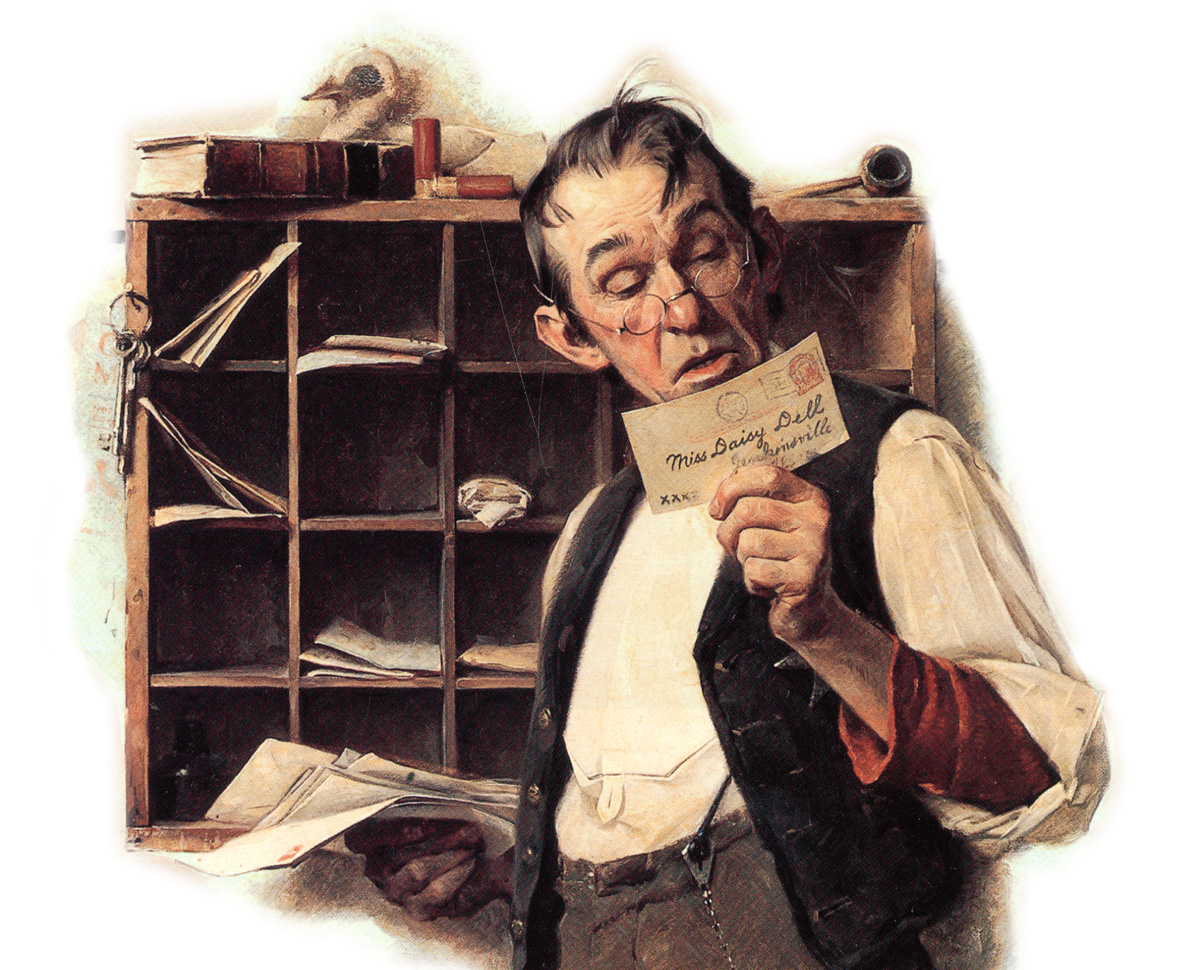
| A Day in the Life: Norman Rockwell’s Stockbridge Studio Opening on May 1, 2009 During his career, Norman Rockwell occupied approximately seventeen studios and borrowed at least six while away from home. All were arranged in a similar manner. Unlike the stereotypical disheveled artist’s studio, Rockwell’s were always neat and organized. His creativity and prolific production seemed to depend on a physical environment of tidy organization.
In celebration of the Norman Rockwell Museum’s 40th anniversary, this refreshed installation of the workspace that Rockwell considered his “best studio yet” invites viewers to enter into a day in his profoundly busy work life, and to ponder the aesthetic and practical concerns that informed the artist’s imagery and experience.
|
John-Sloan-On-the-Court_500.jpg)
On the Court at Wissahickon Heights by John Sloan Ink on paper. Illustration for The Philadelphia Inquirer, February 12, 1892. Collection of the Delaware Art Museum, John Sloan Trust
©1892 |
 |
| Double Identity: American Artists as Illustrators June 6, 2009 through October 25, 2009 Double Identity: American Moderns as Illustrators presents a unique and comprehensive study of both the personal and public art of America’s modern masters. Attitudes toward art and the crosscurrents of contemporary commercial society during the early to mid 20th century will be explored in this exhibition, which seeks to provide an integrated understanding of diverse artistic responses to a rapidly changing world.
Many noted American modernists have successfully traversed the worlds of fine art and illustration, embracing innovation while satisfying in unique and personal ways the needs and wants of a broad popular audience. Overriding modernist precepts stressed a lack of premeditation, the priority of formalistic concerns, and such technical innovations as nonillusionistic flatness, all-over composition, and a lack of finish. Often set aside for more traditional, narrative representation in art for publication, these approaches were sometimes ingeniously integrated into illustrated images by artists dedicated to the exploration of new ways of seeing and working during the first half of the 20th century.
Double Identity: American Moderns as Illustrators will offer insights into these and other considerations through the juxtaposition of original paintings and illustrations created by a conceptually and stylistically diverse group of noted artists. In addition to those mentioned previously, the art of Stuart Davis, Charles Demuth, George Luks, John Sloan, Walt Kuhn, Peggy Bacon, Maurice Prendergast, Jacob Lawrence, Thomas Hart Benton, Grant Wood, Edward Hopper, Rockwell Kent, Max Weber, Abraham Walkowitz, Andy Warhol (1928-1987) and others will be on view.
|
| Stone's Throw: Peter Rockwell, Sculptor July 11, 2009 through October 25, 2009 As a young man, Peter Rockwell had no interest in pursuing a career as an artist, and intentionally avoided the arts because they were "too much in the family." A student of English literature at Haverford College, he eventually enrolled in a sculpture class at the prompting of his mother, Mary Rockwell, and "fell head-over-heels in love with it."
Today a noted sculptor and art historian, Peter Rockwell is the youngest son of legendary American illustrator, Norman Rockwell. His vibrant, animated works, inspired by circus acrobats, animals in motion, gargoyles, and monsters are featured in the collections of the National Portrait Gallery, The Bridgeport Museum of American Art, and the Norman Rockwell Museum, which holds the largest compilation of his art. A leading scholar of the history of stone carving, he has documented his knowledge in The Art of Stoneworking, his highly-regarded reference guide. An outstanding collection of the artist’s bronze, marble, and limestone sculptures will be on view on our pastoral landscape in celebration of the Norman Rockwell Museum’s fortieth anniversary.
|
| Norman Rockwell: Behind the Camera November 7, 2009 through May 24, 2010 Photography has been a benevolent tool for artists from Thomas Eakins and Edgar Degas to David Hockney. And to illustrators, always on the lookout for better ways to meet deadlines, the camera has long been a natural ally. But the thousands of photographs Norman Rockwell created as studies for his iconic images are a case apart. A natural storyteller, Rockwell envisioned his narrative scenarios down to the smallest detail. Yet at the easel he was an absolute literalist who rarely painted directly from his imagination.
Instead, he first brought his ideas to life in studio sessions, staging photographs that are fully realized works of art in their own right. Selecting props and locations, choosing and directing his models, he carefully orchestrated each element of his design for the camera before beginning to paint. Meticulously composed and richly detailed, Norman Rockwell’s study photographs mirror his masterworks in a tangible parallel universe. Photography opened a door to the keenly observed authenticity that defines Norman Rockwell’s art. And for us today it is a revelation to discover that so many of his most memorable characters were, in fact, real people.
Curator and author Ron Schick is the first to undertake a frame-by-frame study of the Norman Rockwell Museum’s newly digitized photography archive, the product of a just-completed two-year “Save America’s Treasures” project that has preserved the artist’s archive of almost 20,000 negatives and made accessible the full range of the artist’s photography. His forthcoming book, Norman Rockwell: Behind the Camera, will be published by Little, Brown and Company in 2009.
|